
Modern methods to follow-up of obese patient
DOI: 10.32364/2587-6821-2020-4-5-308-313
V.A. Akhmedov, A.S. Gudim
Omsk State Medical University, Omsk, Russian Federation
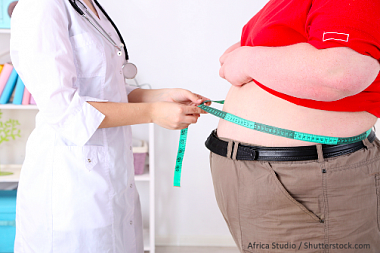
Obesity and its concomitant diseases preserve to be an urgent problem of modern medicine, as they are widespread worldwide and lead to negative medical, social and economic consequences that damage both patients and the state. The article presents statistical data reflecting the situation of obesity in Russia, describes the risk factors of obesity, highlights modern methods to follow-up of patients with obesity (e.g., correction of lifestyle and nutrition with the calorie control, change in physical activity, the use of pharmacological drugs and conducting various types of bariatric interventions). It is noted that the key factors that prevent the obesity development and control the body weight are rational nutrition (taking into account individual health problem), compliance with the principles of moderation, diversity, and dietary intake. Besides, it may be useful to practice wellness techniques (e.g., callanetics), which help to reduce and normalize body weight and develop concentration and stress tolerance. Special attention is paid to the obesity effect on the course of COVID-19 infection, which causes higher susceptibility and the development of severe complications.
KEYWORDS: obesity, overweight, risk factor, rational nutrition, diet, physical activity.For citation: Akhmedov V.A., Gudim A.S. Modern methods to follow-up of obese patient. Russian Medical Inquiry. 2020;4(5):308–313. DOI: 10.32364/2587-6821-2020-4-5-308-313.
ABOUT THE AUTHORS:
Vadim A. Akhmedov — Dr. of Sci. (Med), Professor, Head of the CPE Department of Medical Rehabilitation, Omsk State Medical University: 12, Lenina str., Omsk, 644099, Russian Federation, ORCID iD 0000-0002-7603-8481.
Alexandr S. Gudim — 6-th-year student of the Department of General Medicine, Omsk State Medical University: 12, Lenina str., Omsk, 644099, Russian Federation.
Contact information: Vadim A. Akhmedov, e-mail: v_akhmedov@mail.ru. Financial Disclosure: no authors have a financial or property interest in any material or method mentioned. There is no conflict of interest. Received 04.02.2020, revised 18.02.2020, accepted 03.03.2020.
2. Dedov I.I., Melnichenko G.A., Shestakova M.V. et al. Russian national clinical recommendations for morbid obesity treatment in adults. 3rd revision (Morbid obesity treatment in adults). Obesity and Metabolism. 2018;15(1):53–70 (in Russ.). DOI: 10.14341/OMET2018153-70.
3. Zhernakova Y.V., Zheleznova E.A., Chazova I.E. et al. The prevalence of abdominal obesity and the association with socioeconomic status in Regions of the Russian Federation, the results of the epidemiological study — ESSE-RF. Therapeutic archive. 2018;90(10):14–22 (in Russ.). DOI: 10.26442/terarkh201890104-22.
4. Livzan M.A., Gaus O.V., Turchaninov D.V., Popello D.V. Abdominal Pain Syndrome in Youth: Prevalence and Risk Factors. Experimental and Clinical Gastroenterology. 2019;1(10):12–17 (in Russ.). DOI: 10.31146/1682-8658-ecg-170-10-12-17.
5. Bray G.A., Heisel W.E., Afshin A. et al. The science of obesity management: an endocrine society scientific statement. Endocr Rev. 2018;39(2):79–132. DOI: 10.1210/er.2017-00253.
6. Lee B.Y., Bartsch S.M., Mui Y. et al. A systems approach to obesity. Nutr. Rev. 2017;75(Suppl 1):94–106. DOI: 10.1093/nutrit/nuw049.
7. Nedogoda S.V., Barykina I.N., Salasyuk A.S. National clinical recommendations for obesity: concept and prospects. Journal of Volgograd State Medical University. 2017;1(61):134–140 (in Russ.). DOI: 10.19163/1994–9480–2017–1 (61) —134–140.
8. Akhmedov V.A., Gaus O.V. Involvement of the hepatobiliary system and pancreas in obesity. Therapeutic archiv. 2017;89(1):128–133 (in Russ.). DOI: 10.17116/terarkh2017891128-133.
9. Gaus O.V., Akhmedov V.A. Evaluation of prognostic factors for the development of holelithiasis in patients with metabolic syndrome. Experimental and Clinical Gastroenterology. 2014;11(111):46–50 (in Russ.).
10. Gaus O.V., Akhmedov V.A. Effect of metabolic syndrome on the state of the liver parenchyma and biliary system in patients with cholelithiasis. Ural medical Journal. 2015;1(124):132–137 (in Russ.).
11. Gaus O.V., Akhmedov V.A. Immunologic parallels in the metabolic syndrome associated with gallstone disease. Fundamental’nyye issledovaniya. 2013;7:51–54 (in Russ.).
12. Dutton H.P., Borengasser S.J., Gaudet L.M. et al. Obesity in pregnancy — optimizing outcomes for mom and baby. Med Clin North Am. 2018;102(1):87–106. DOI: 10.1016/j.mcna.2017.08.008.
13. Rebello C.J., Kirwan J.P., Greenway F.L. Obesity, the most common comorbidity in SARS-CoV-2: is leptin the link? Int J Obes (Lond). 2020;9:1–8. DOI: 10.1038/s41366-020-0640-5.
14. Khan A.S., Hichami A., Khan N.A. Obesity and COVID-19: Oro-Naso-Sensory Perception. J Clin Med. 2020;9(7): E2158. DOI: 10.3390/jcm9072158.
15. Chiappetta S., Sharma A.M., Bottino V., Stier C. COVID-19 and the role of chronic inflammation in patients with obesity. Int J Obes (Lond). 2020;14:1–3. DOI: 10.1038/s41366-020-0597-4.
16. Alberca R.W., Oliveira L.M., Branco A.C. et al. Obesity as a risk factor for COVID-19: an overview. Crit Rev Food Sci Nutr. 2020;15:1–15. DOI: 10.1080/10408398.2020.1775546.
17. Tamara A., Tahapary D.L. Obesity as a predictor for a poor prognosis of COVID-19: A systematic review. Diabetes Metab Syndr. 2020;14(4):655–659. DOI: 10.1016/j.dsx.2020.05.020.
18. Rusakova D.S. Specificities of the nutritional status in patients with varied degrees of obesity. Nutrition. 2014;4(1):53–56 (in Russ.).
19. Malm C., Jakobsson J., Isaksson A. Physical activity and sports — real health benefits: a review with insight into the public health of Sweden. Sports (Basel). 2019;7(5):127. DOI: 10.3390/sports7050127.
20. Narayanaswami V., Dwoskin L.P. Obesity: current and potential pharmacotheraupeutics and targets. Pharmacol Ther. 2017;170:116–147. DOI: 10.1016/j.pharmthera.2016.10.015.
21. Holscher H.D. Dietary fiber and prebiotics and the gastrointestinal microbiota. Gut Microbes. 2017;8(2):172–184. DOI: 10.1080/19490976.2017.1290756.
22. Gaus O.V., Livzan M.A. Irritable bowel syndrome: what do we know about symptoms today? Consilium Medicum. 2019;21(8):42–48 (in Russ.). DOI: 10.26442/20751753.2019.8.190512.
23. Al-Khudairy L., Loveman E., Colquitt J.L. et al. Diet, phisical activity and behavioural interventions for the treatment of overweight or obese adolescents aged 12 to 17 years. Cochrane Database Syst Rev. 2017;2017(6): CD012691. DOI: 10.1002/14651858.CD012691.
24. Storozhenko I.I., Ivanov T.A. Adaptive physical education programs in the higher educational system. Voyennyy nauchno-prakticheskiy vestnik. 2014;1(1):60–62 (in Russ.).
25. Sacks F.M., Bray G.A., Carey V.J. et al. Comparison of weight-loss diets with different compositions of fat, protein, and carbohydrates. N Engl J Med. 2009;360(9):859–873. DOI: 10.1056/NEJMoa0804748.
26. Naude C.E., Schoonees A., Senekal M. et al. Low carbohydrate versus isoenergietic balanced diets for reducing weight and cardiovascular risk: a systematic review and meta-analysis. PLoS One. 2014;9(7): e100652. DOI: 10.1371/journal.pone.0100652.
27. De Bock M., Derraik J.G.B., Brennan C.M. et al. Psyllium supplementation in adolescents improves fat distribution and lipid profile: a randomized, participant-blinded, placebo-controlled, crossover trial. PLoS One. 2012;7(7): e41735. DOI: 10.1371/journal.pone.0041735.
28. Wolfe B.M., Kvach E., Eckel R.H. Treatment of Obesity: Weight Loss and Bariatric Surgery. Circ Res. 2016;118(11):1844–1855. DOI: 10.1161/CIRCRESAHA.116.307591.
29. DeSimone M.E. The future of obesity care. J Am Assoc Nurse Pract. 2020;32(7):489. DOI: 10.1097/JXX.0000000000000462.
30. Sullivan P., Kincaid Z. Obesity as a chronic care challenge: new opportunities for social work practice. Soc Work Health Care. 2020;9:1–15. DOI: 10.1080/00981389.2020.1790079.

This work is licensed under a Creative Commons «Attribution» 4.0 License.

Распечатать